Fast, Noninvasive EKG Testing in Hackensack, NJ
EKG Test in Hackensack, NJ
An EKG — short for electrocardiogram — is one of the most common and valuable tools in cardiovascular testing. It is a quick, painless, noninvasive test that measures the electrical activity of your heart, giving your cardiologist a snapshot of how your heart is beating and whether any abnormalities are present. Despite its simplicity, an EKG can provide a wealth of information and is often one of the first tests ordered when cardiac symptoms arise.
Advanced Cardiovascular Interventions (ACI) offers EKG testing as part of a comprehensive range of cardiac testing services in Hackensack, NJ. Dr. Hamid Nia and his team are committed to making cardiac screening as convenient and stress-free as possible, with in-house testing, easy access, and results reviewed directly by Dr. Nia. Whether you've been referred for an EKG or are experiencing symptoms that need evaluation, ACI is here to help. Request an appointment today.
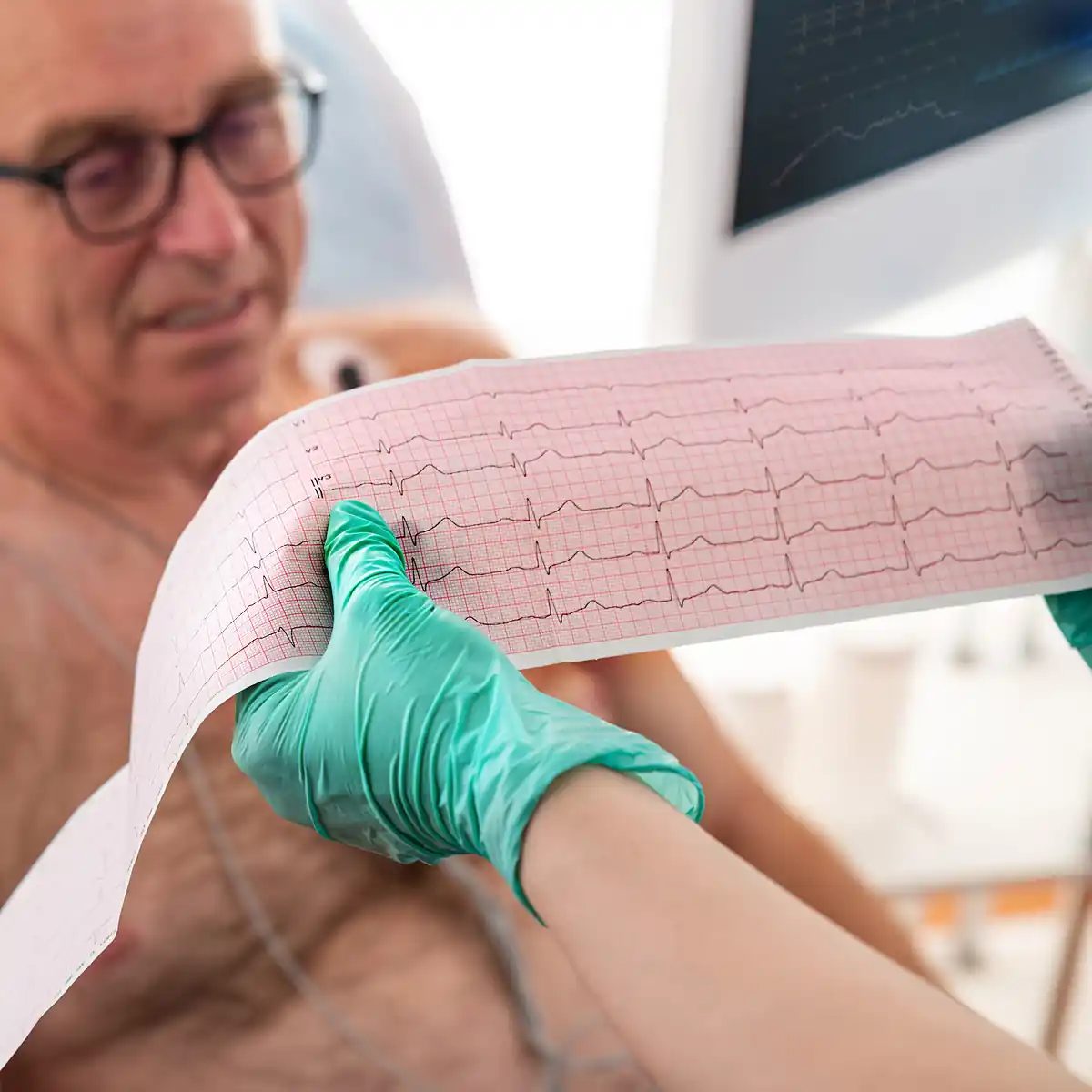
What to Expect From an EKG Test at ACI
EKG Testing at ACI
An EKG is one of the fastest and most straightforward cardiac tests available. Here is what most patients can expect:
- Preparation: No special preparation is needed for a standard EKG. You will be asked to lie still on an exam table and expose your chest, arms, and legs for electrode placement.
- During the test: A member of the ACI team will attach small electrode patches to your skin. These electrodes detect the electrical signals produced by your heart and transmit them to the EKG machine, which records them as a series of waves on a graph.
- Duration: The test itself typically takes less than ten minutes from start to finish, making it one of the quickest forms of cardiac screening available.
- Results: Dr. Nia will review your EKG tracing and discuss the findings with you, explaining what the results mean and whether any additional testing — such as a Holter monitor, stress test, or echocardiogram — may be recommended.
The EKG is entirely noninvasive and poses no risk to patients of any age or health status.
What an EKG Can Reveal About Your Heart Health
What Does an EKG Measure?
An EKG measures the electrical impulses that travel through your heart with each beat, recording them as a series of waves that reflect the activity of different parts of the heart muscle. Dr. Nia uses this data to evaluate:
- Heart rate: Whether your heart is beating too fast, too slow, or irregularly
- Heart rhythm: Whether the electrical signals are following a normal, organized pattern
- Chamber size and function: Whether any chambers of the heart appear enlarged or under stress
- Evidence of prior heart attack: Whether there are signs of damage to the heart muscle from a previous cardiac event
- Conduction abnormalities: Whether there are delays or disruptions in the way electrical signals travel through the heart
While an EKG is a powerful diagnostic tool, it captures only a brief moment in time. For symptoms that come and go, Dr. Nia may recommend longer-term monitoring options such as a Holter monitor or long-term cardiac monitoring.
Frequently Asked Questions
What Is an EKG Test?
An EKG — or electrocardiogram — is a noninvasive test that records the electrical activity of the heart over a short period of time. Electrodes placed on the skin detect the heart's electrical signals, which are displayed as a waveform tracing that Dr. Nia analyzes for signs of abnormality. It is one of the most widely used tools in cardiovascular testing and is often the first step in evaluating a wide range of cardiac symptoms.
Can an EKG Detect a Blockage?
An EKG can provide important clues about potential blockages in the coronary arteries, particularly if there has been a prior heart attack or if the heart muscle is under stress. However, an EKG alone cannot definitively identify a blockage. If Dr. Nia suspects coronary artery disease or significant arterial narrowing based on your EKG results or symptoms, he may recommend additional testing such as a stress test, nuclear stress test, or cardiac catheterization for a more complete evaluation.
How Long Does an EKG Test Take?
An EKG test typically takes less than ten minutes from start to finish. Electrode placement takes just a few minutes, and the actual recording lasts only about 30 seconds to a minute. It is one of the quickest forms of cardiac screening available, and most patients are in and out of the office in very little time. Dr. Nia will review your results and discuss next steps with you at the same appointment.
Where Can Patients Find an EKG Test Near Hackensack, NJ?
ACI is located at 363 Prospect Ave in Hackensack, NJ. Just look for the big green house. The office is on the first floor with convenient parking and elevator access, making it easy to stop in for a quick cardiac screening. We offer online scheduling, and Dr. Nia and his team are ready to welcome you. Request an appointment today — we look forward to seeing you.