Cardiac Stress Testing in Hackensack, NJ
Cardiac Stress Test in Hackensack, NJ
Your heart may perform perfectly well at rest, but how does it hold up under pressure? A cardiac stress test is one of the most effective tools available for evaluating how your heart responds to physical exertion, helping your cardiologist detect conditions that might not be apparent during a routine office visit. By monitoring your heart's activity while you exercise, Dr. Hamid Nia can identify warning signs of coronary artery disease, irregular heart rhythms, and other cardiovascular concerns before they become serious problems.
Advanced Cardiovascular Interventions (ACI) offers cardiac stress testing as part of a comprehensive suite of cardiac testing services in Hackensack, NJ. Dr. Nia takes a thorough, patient-centered approach to every evaluation, taking the time to review your symptoms, explain your results, and develop a personalized plan for your cardiovascular health. Whether you've been referred for a stress test or are experiencing symptoms that need further investigation, ACI is here to help. Request an appointment today.
What to Expect From a Cardiac Stress Test at ACI
Cardiac Stress Test Procedure at ACI
A cardiac stress test at ACI is straightforward, safe, and typically completed within an hour. Here is what most patients can expect:
- Preparation: You will be asked to avoid eating, drinking caffeine, and taking certain medications for several hours before the test. Wear comfortable clothing and walking shoes, as you will be exercising on a treadmill. Dr. Nia's team will provide detailed preparation instructions ahead of your appointment.
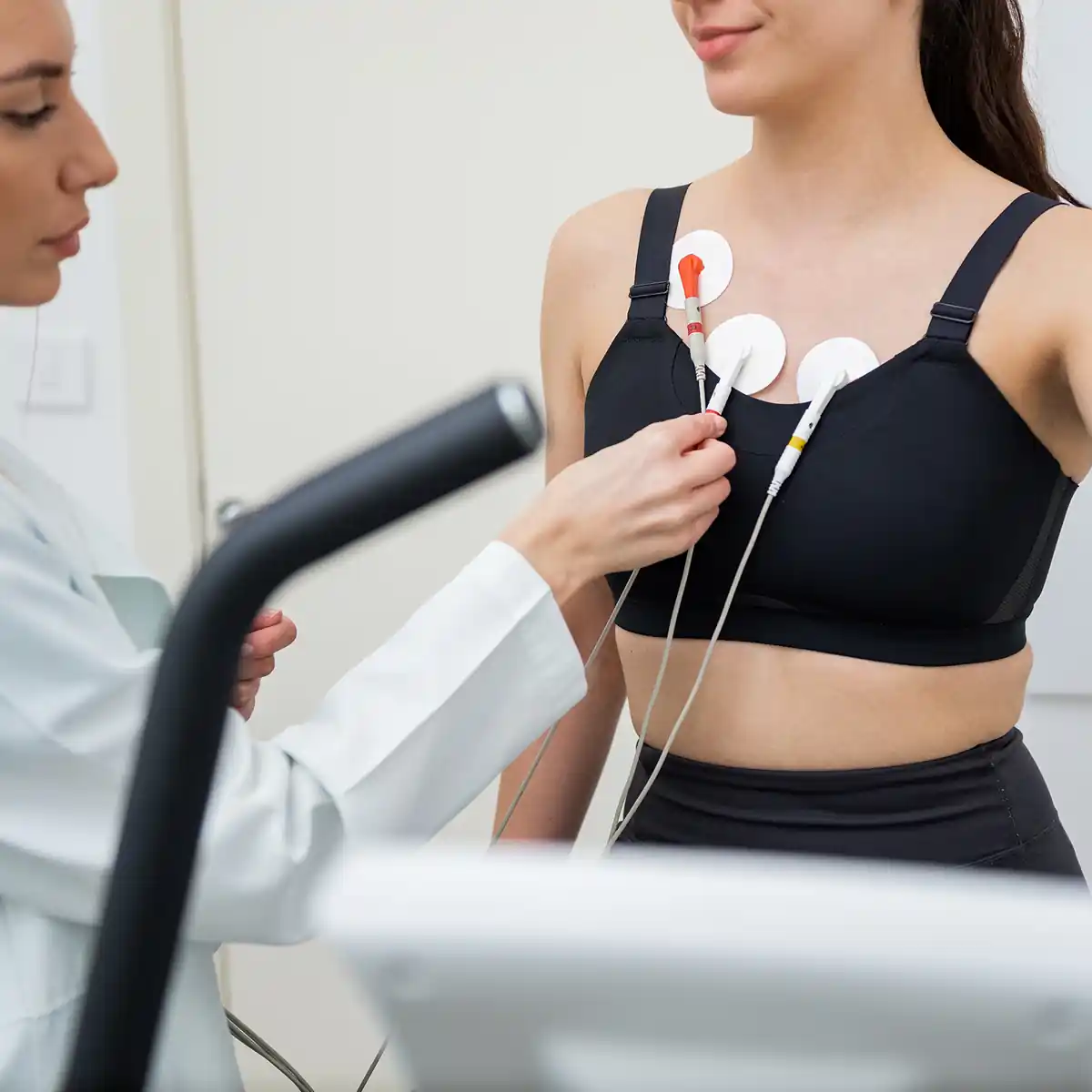
- Getting set up: Electrode patches will be placed on your chest to continuously monitor your heart's electrical activity via EKG throughout the test. A blood pressure cuff will also be placed on your arm to track your blood pressure at regular intervals.
- The treadmill test: You will begin walking on a treadmill at a slow, comfortable pace. Every few minutes, the speed and incline of the treadmill will gradually increase, raising your heart rate toward a target level based on your age and fitness. The goal is to stress the heart enough to reveal any abnormalities that only appear during exertion.
- Stopping the test: The test continues until you reach your target heart rate, experience symptoms that warrant stopping, or indicate that you need to stop. You will never be pushed beyond what is safe or comfortable.
- Recovery and results: After the exercise phase, you will be monitored for several minutes while your heart rate and blood pressure return to normal. Dr. Nia will then review the data collected during the test and discuss his findings with you directly.
If you are unable to exercise on a treadmill due to a physical limitation, Dr. Nia may recommend a pharmacological stress test, in which a medication is used to simulate the effects of exercise on the heart.
Signs You May Need a Cardiac Stress Test
What Does a Cardiac Stress Test Diagnose?
A cardiac stress test provides Dr. Nia with valuable information about how your heart and cardiovascular system respond to physical demand. It is commonly used to:
- Detect coronary artery disease — narrowing or blockage of the arteries that supply blood to the heart
- Evaluate chest pain, shortness of breath, or other symptoms that occur during physical activity
- Assess the risk of a future cardiac event in patients with known cardiovascular risk factors
- Monitor the effectiveness of treatment in patients already diagnosed with heart disease
- Determine a safe level of exercise for patients recovering from a heart attack or cardiac procedure
- Evaluate unexplained fatigue or decreased exercise tolerance
You may be a candidate for a cardiac stress test if you are experiencing chest pain or pressure during activity, shortness of breath with minimal exertion, heart palpitations or an irregular heartbeat during exercise, dizziness or lightheadedness during physical activity, or if you have risk factors such as high blood pressure, high cholesterol, diabetes, or a family history of heart disease. Dr. Nia will evaluate your symptoms and medical history to determine whether a stress test or a more advanced option, such as a stress echocardiogram or nuclear stress test, is the right next step for you.
Frequently Asked Questions
What Is a Cardiac Stress Test?
A cardiac stress test — also known as an exercise stress test or treadmill test — is a noninvasive diagnostic procedure that monitors the heart's electrical activity, blood pressure, and rhythm while the patient exercises at gradually increasing intensity. It is one of the most widely used tools in cardiovascular testing and serves as a critical first step in evaluating a wide range of cardiac symptoms and risk factors. At ACI, all stress tests are supervised and interpreted by Dr. Nia, ensuring that your results are reviewed with the highest level of expertise and clinical context.
How Long Does a Cardiac Stress Test Take?
A cardiac stress test at ACI typically takes between 30 and 60 minutes from start to finish, including preparation, the exercise phase, and the recovery period. The treadmill portion itself usually lasts between 8 and 12 minutes, depending on your fitness level and target heart rate. Dr. Nia will discuss your results with you at the same appointment, so you leave with a clear understanding of your heart health.
What Happens During a Cardiac Stress Test?
During a cardiac stress test, electrode patches are placed on your chest to monitor your heart's electrical activity via EKG while you walk on a treadmill at increasing speeds and inclines. Your blood pressure is also measured at regular intervals throughout the test. Dr. Nia and his team monitor all of this data in real time, watching for any changes in heart rhythm, blood pressure, or EKG readings that may indicate an underlying cardiovascular condition. The test is safe, well-tolerated by most patients, and takes place in a fully supervised clinical setting.
Where Can Patients Find a Cardiac Stress Test Near Hackensack, NJ?
ACI is located at 363 Prospect Ave in Hackensack, NJ — just look for the big green house. The office is on the first floor with convenient parking and elevator access, making it easy to come in for a cardiac stress test without the hassle of navigating a large hospital or testing center. We offer online scheduling, and Dr. Nia and his team look forward to welcoming you. Request an appointment today. We can't wait to see you.