Noninvasive Heart Imaging in Hackensack, NJ
Echocardiogram in Hackensack, NJ
An echocardiogram is one of the most powerful and informative noninvasive cardiac tests available. Using high-frequency sound waves — similar to those used in a standard ultrasound — an echocardiogram produces detailed, real-time images of your heart's structure and function, giving your cardiologist a comprehensive view of how your heart is performing. It is a safe, painless test that requires no radiation and can reveal a wide range of cardiovascular conditions that might not be detectable through other forms of cardiac screening.
Advanced Cardiovascular Interventions (ACI) offers echocardiogram testing as part of a full suite of cardiac testing services in Hackensack, NJ. Dr. Hamid Nia uses echocardiography as a key diagnostic tool to evaluate heart health, monitor known conditions, and guide treatment decisions. With in-house testing and results reviewed directly by Dr. Nia, patients receive expert cardiac care without the need to travel to a separate imaging facility. Request an appointment today.
What to Expect From an Echocardiogram at ACI
Echocardiogram Testing at ACI
An echocardiogram is a straightforward, comfortable test that most patients find easy to tolerate. Here is what to expect:
- Preparation: No special preparation is typically required for a standard echocardiogram. You will be asked to undress from the waist up and lie on an exam table, and electrode patches will be placed on your chest to monitor your heart rhythm during the test.
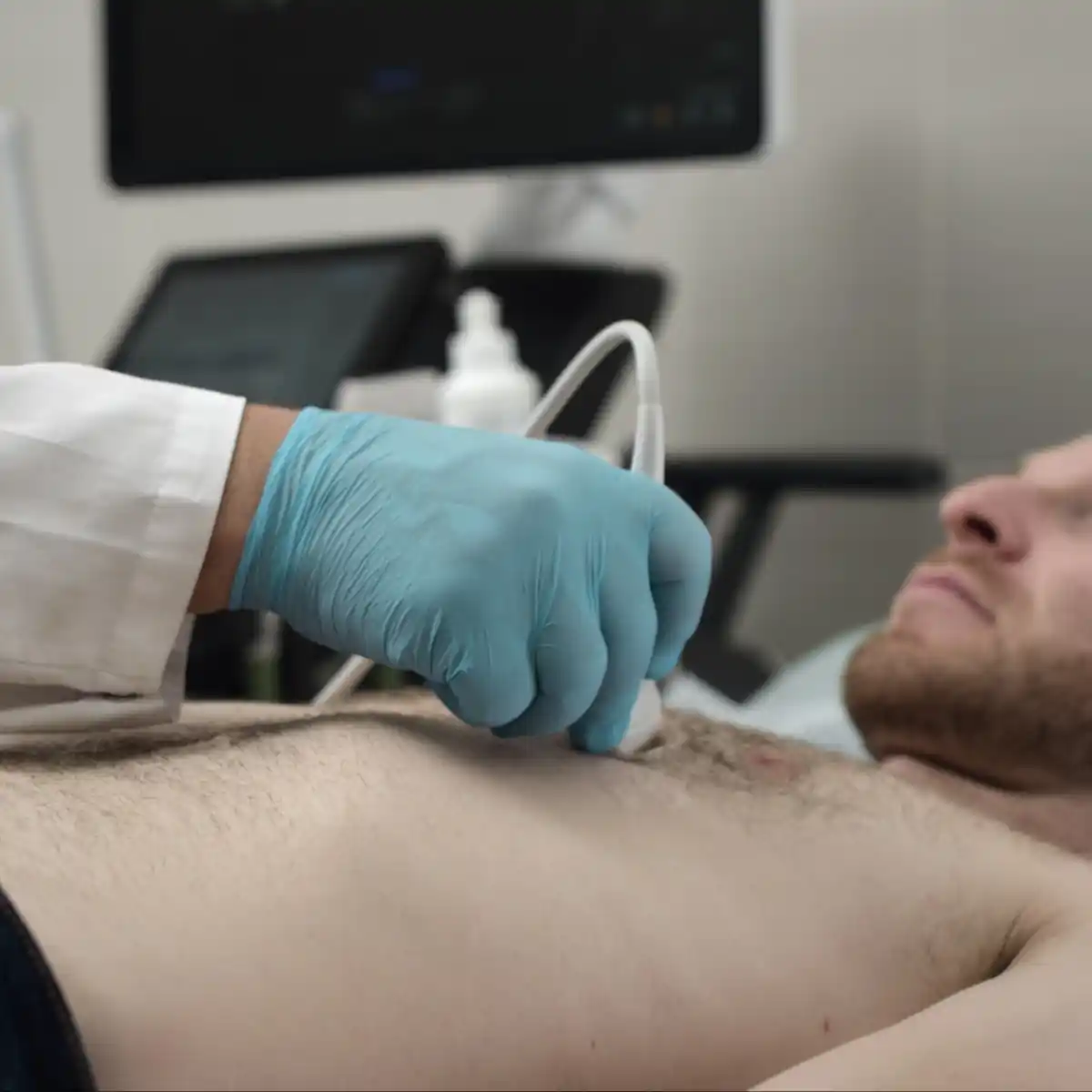
- During the test: A trained sonographer will apply a small amount of gel to your chest and move a handheld device called a transducer across the skin. The transducer emits sound waves that bounce off the heart and produce images on a monitor in real time.
- Duration: A standard echocardiogram typically takes between 30 and 60 minutes, depending on the level of detail required.
- Results: Dr. Nia will carefully review the images and discuss his findings with you, explaining what the echocardiogram shows and whether any additional testing or treatment is recommended.
The echocardiogram is entirely noninvasive and poses no known risks to patients of any age or health status.
What an Echocardiogram Can Reveal About Your Heart
What Does an Echocardiogram Show?
An echocardiogram provides a detailed view of virtually every aspect of the heart's structure and function. Dr. Nia uses echocardiography to evaluate:
- Heart size and shape: Whether the heart chambers or walls are enlarged, thickened, or structurally abnormal
- Heart valve function: Whether the valves are opening and closing properly, and whether there is any evidence of narrowing (stenosis) or leaking (regurgitation)
- Pumping function: How effectively the heart is contracting and pumping blood to the rest of the body, measured as the ejection fraction
- Heart wall motion: Whether all areas of the heart muscle are moving normally, or whether some regions appear weakened or damaged
- Fluid around the heart: Whether there is any abnormal fluid accumulation in the sac surrounding the heart (pericardial effusion)
- Congenital abnormalities: Whether there are any structural defects present from birth
For patients who need a more dynamic view of heart function under physical stress, Dr. Nia may recommend a stress echocardiogram, which combines echocardiography with exercise or medication-induced stress.
Frequently Asked Questions
What Is an Echocardiogram?
An echocardiogram — sometimes called a cardiac ultrasound or heart scan — is a noninvasive imaging test that uses sound waves to create real-time pictures of the heart. It is one of the most widely used cardiac diagnostic tests in cardiology and can provide detailed information about the heart's structure, valve function, and pumping capacity. Unlike an EKG, which measures electrical activity, an echocardiogram produces actual images of the heart in motion, making it an invaluable tool for diagnosing a wide range of cardiovascular conditions.
Can an Echocardiogram Detect a Heart Attack?
An echocardiogram can detect evidence of a prior heart attack by identifying areas of the heart muscle that are no longer contracting normally — a sign of permanent damage caused by reduced blood flow. However, it is not typically used as a first-line test during an acute cardiac event. If Dr. Nia suspects coronary artery disease or a significant blockage, he may recommend additional testing such as a stress test, nuclear stress test, or cardiac catheterization to further evaluate blood flow to the heart.
How Long Does an Echocardiogram Take?
A standard echocardiogram at ACI typically takes between 30 and 60 minutes from start to finish. The test itself is relaxed and comfortable — you will simply lie still while the sonographer captures images of your heart. Dr. Nia will review the results and discuss his findings with you, ensuring you leave your appointment with a clear understanding of your heart health.
Where Can Patients Find an Echocardiogram Near Hackensack, NJ?
ACI is located at 363 Prospect Ave in Hackensack, NJ. Just look for the big green house. The office is on the first floor with convenient parking and elevator access, making it easy to come in for a heart scan without the hassle of navigating a large hospital or imaging center. We offer online scheduling, and Dr. Nia and his team look forward to welcoming you. Request an appointment today — we can't wait to see you.